
Easy Miso Soup Recipe- Quick & Flavorful Comfort
Miso soup recipe: your gateway to a soul-warming, incredibly satisfying bowl of comfort! There’s something profoundly comforting about a steaming bowl of miso soup, isn’t there? It’s the quintessential starter in Japanese cuisine, a gentle preamble that awakens the palate and soothes the spirit. But beyond its role as an appetizer, this humble soup is a culinary marvel, loved worldwide for its delicate balance of savory, umami-rich flavors and its surprisingly light yet deeply nourishing qualities. What makes this simple miso soup recipe so special? It’s the magic of fermented soybean paste, that earthy, complex ingredient that transforms humble dashi broth into something truly extraordinary. It’s quick to make, endlessly adaptable, and always delivers a hug in a bowl, perfect for any time of day.
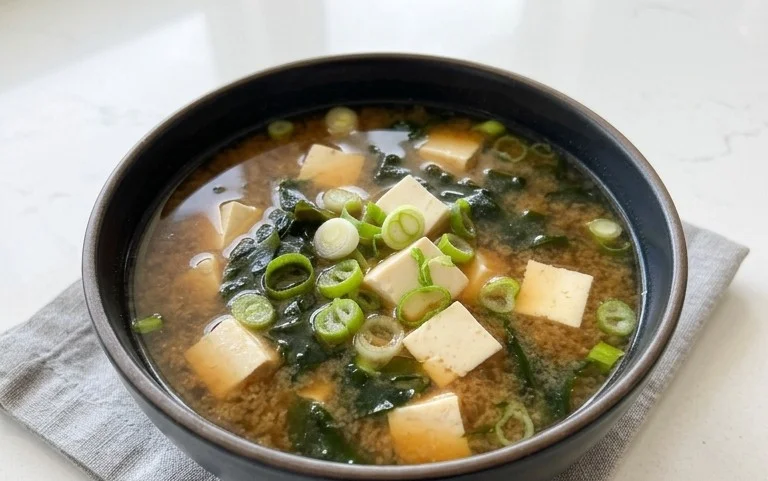
Miso Soup Recipe
There’s something incredibly comforting and nourishing about a steaming bowl of miso soup. It’s a staple in Japanese cuisine for a reason – it’s quick to make, packed with umami flavor, and incredibly versatile. Whether you’re looking for a light starter to a meal, a comforting midday pick-me-up, or even a simple breakfast, this classic miso soup recipe is your answer. We’ll guide you through each step, from preparing the dashi broth to achieving that perfect balance of savory miso flavor. Don’t be intimidated by the Japanese ingredients; they are readily available in most Asian markets and increasingly in larger supermarkets. This recipe is designed to be straightforward, allowing you to create authentic-tasting miso soup right in your own kitchen.
Ingredients:
Cooking Instructions
This miso soup recipe is incredibly forgiving, making it perfect for begin extractners. The key is to use good quality dashi and miso paste. You can buy instant dashi granules or packets, or if you’re feeling adventurous, you can make your own from scratch using kombu (kelp) and katsuobushi (bonito flakes). For this recipe, we’ll assume you’re using a good quality instant dashi.
1. Rehydrating the Seaweed and Preparing the Dashi
Begin extract by rehydrating your dried seaweed. If you’re using wakame, a common type for miso soup, it will expand significantly. Place the dried seaweed in a small bowl and cover it with cool water. Let it sit for about 5-10 minutes, or until it’s fully softened and has increased in volume. Once rehydrated, drain off the excess water and gently squeeze out any remaining moisture. You can then roughly chop it into smaller, bite-sized pieces if they are still too large. While the seaweed rehydrates, prepare your dashi broth. If you are using instant dashi granules, follow the package instructions to dissolve them in the correct amount of hot water. You should have approximately 2½ cups of dashi ready. If you are using liquid dashi concentrate, dilute it with hot water according to its instructions. The dashi is the fundamental flavor base of your soup, so ensure it’s well-prepared.
2. Gently Heating the Dashi and Adding the Tofu
Pour your prepared dashi broth into a medium saucepan. Place the saucepan over medium heat. We want to bring the dashi to a gentle simmer, not a rolling boil. A gentle simmer will extract the best flavors without making the broth cloudy or dull. Once the dashi is warm and starting to show small bubbles around the edges of the pot, carefully add the silken tofu pieces. Be gentle when adding the tofu, as silken tofu is quite delicate and can break apart easily. We’re just warming the tofu through, not cooking it extensively. Let it simmer gently in the dashi for about 2-3 minutes, allowing it to absorb some of the savory broth.
3. Incorporating the Rehydrated Seaweed
Now it’s time to add the rehydrated and chopped seaweed to the pot. Stir it gently into the dashi and tofu mixture. The seaweed will add a subtle oceanic flavor and a pleasing chewy texture to the soup. Continue to simmer for another minute or two, just enough for the seaweed to soften slightly further and meld with the other ingredients. At this stage, you can adjust the heat to maintain a very low simmer. The key to a great miso soup is not to overcook the ingredients, especially the tofu and seaweed, as they can lose their desirable textures.
4. Dissolving the Miso Paste – The Crucial Step
This is perhaps the most critical step in making perfect miso soup. Miso paste is a fermented product and should not be boiled vigorously, as boiling can destroy its delicate flavor and beneficial probiotics. To properly incorporate the miso, it’s best to use a small ladle or a whisk. Ladle out about ½ cup of the warm dashi broth from the pot into a small bowl. Add your miso paste to this bowl, starting with 2 tablespoons. Whisk or stir the miso paste into the warm dashi until it is completely dissolved and smooth, with no lumps remaining. This process is called “tempering” the miso and ensures it emulsifies beautifully into the soup.
5. Finalizing the Soup and Serving
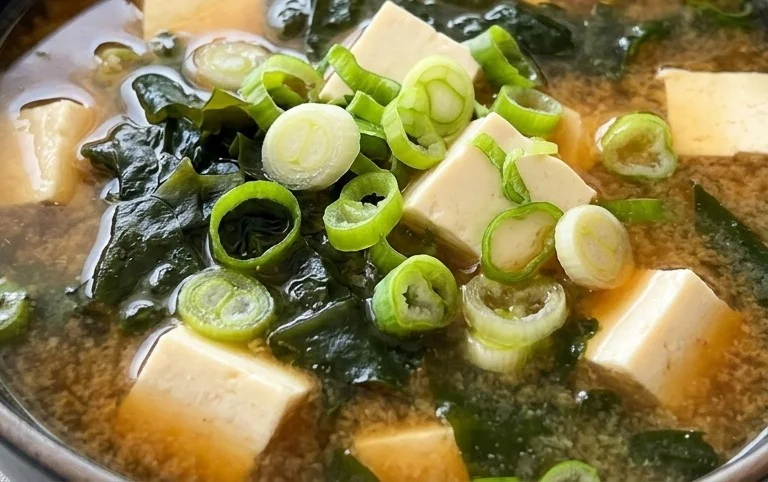
Once the miso paste is fully dissolved in the small bowl, gently pour this mixture back into the saucepan with the rest of the dashi, tofu, and seaweed. Stir everything together gently. Do not let the soup come back to a boil after adding the miso. Heat it through over low heat for just another minute or so, until it’s warm and the miso is fully incorporated. Taste the soup and adjust the seasoning by adding more miso paste if you prefer a stronger flavor, dissolving it in a little more warm broth before adding it to the pot. Finally, ladle the hot miso soup into individual bowls. Garnish each bowl with the chopped scallions. The fresh, sharp bite of the scallions provides a wonderful contrast to the rich, savory broth. Serve immediately and enjoy this simple yet profoundly satisfying dish! This recipe can easily be customized; consider adding mushrooms, a dash of soy sauce, or even a sprinkle of shichimi togarashi (Japanese seven-spice blend) for a little heat.
Conclusion:
And there you have it – your guide to making delicious, authentic miso soup at home! This recipe is truly wonderful because it’s incredibly adaptable, surprisingly quick to prepare, and delivers a deeply satisfying umami flavor that’s both comforting and invigorating. Whether you’re seeking a light starter, a nourishing side dish, or a wholesome meal on its own, this miso soup recipe is a winner. I highly encourage you to give it a try; you’ll be amazed at how easy it is to achieve such fantastic results.
For serving, I love to enjoy my miso soup as a prelude to a sushi dinner or alongside grilled fish. It’s also a fantastic light lunch with a side of rice. Don’t be afraid to experiment with variations! Consider adding silken tofu cubes for extra protein, a sprinkle of toasted sesame seeds for added crunch, or even some thinly sliced shiitake mushrooms for another layer of earthy flavor. The beauty of this recipe lies in its simplicity and its capacity for personalization. So, grab your ingredients and embark on your own miso soup adventure!
Frequently Asked Questions:
What kind of miso paste should I use?
For begin extractners, white miso (shiro miso) is a great starting point as it has a milder, slightly sweeter flavor. Red miso (aka miso) offers a more robust, saltier, and complex taste, while awase miso is a blend of white and red, providing a balanced flavor. You can experiment with each to find your favorite!
Can I add other vegetables to my miso soup?
Absolutely! Beyond the classic wakame seaweed, feel free to incorporate thinly sliced green onions, spinach, bok choy, daikon radish, or even some edamame. Just ensure they are cut small enough to cook quickly.
Miso Soup Recipe
A simple and comforting classic Japanese miso soup, perfect for a quick meal or appetizer.
Ingredients
-
2½ cups Dashi
-
1 heaping tablespoon dried seaweed
-
4 oz silken tofu, cut into small pieces
-
2-2½ tablespoons miso paste, or to taste
-
1 tablespoon scallion, chopped
-
1 teaspoon soy sauce (optional, for extra umami)
-
Pinch of white pepper (optional)
Instructions
-
Step 1
In a medium saucepan, bring the Dashi to a simmer over medium heat. -
Step 2
Add the dried seaweed to the simmering Dashi and let it rehydrate for about 2-3 minutes. -
Step 3
Gently add the silken tofu pieces to the saucepan. Do not stir vigorously as the tofu is delicate. -
Step 4
In a small bowl, whisk the miso paste with a ladleful of the hot Dashi until smooth. This prevents clumps. -
Step 5
Pour the dissolved miso mixture back into the saucepan. Stir gently to combine. -
Step 6
Heat the soup gently until it is hot but not boiling. Boiling can diminish the miso flavor and aroma. Add soy sauce and white pepper if using. -
Step 7
Ladle the miso soup into bowls and garnish with chopped scallions before serving.
Important Information
Nutrition Facts (Per Serving)
It is important to consider this information as approximate and not to use it as definitive health advice.
Allergy Information
Please check ingredients for potential allergens and consult a health professional if in doubt.