Easy Vegan Bibimbap Recipe- Flavorful & Healthy
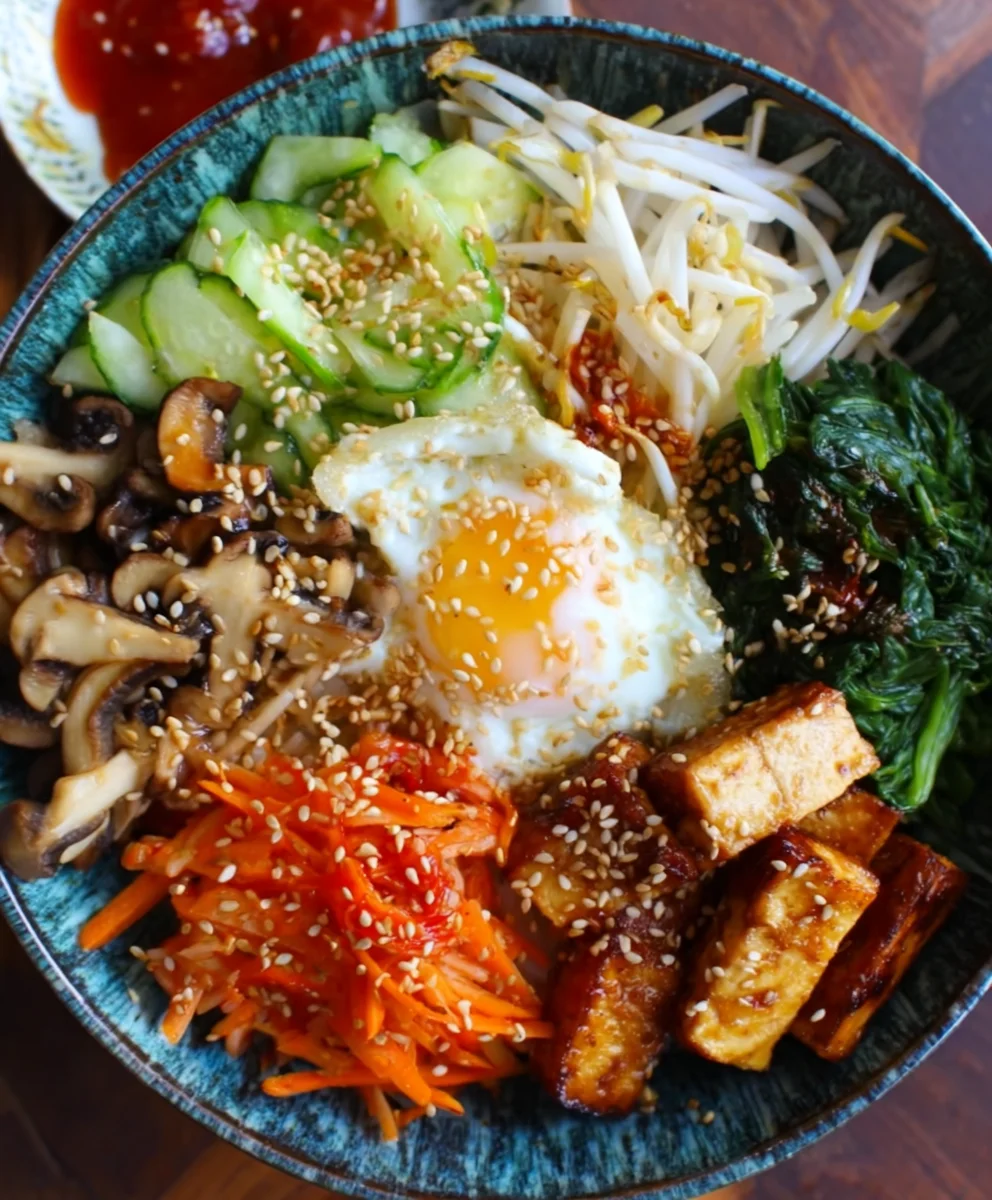
Vegan Bibimbap is a vibrant and delicious Korean rice bowl that has captured hearts (and taste buds!) worldwide, and for good reason. Imagin extracte a perfectly steamed bed of fluffy rice, crowned with a colorful medley of seasoned vegetables, savory plant-based protein, and a dollop of spicy gochujang sauce. It’s a dish that truly awakens the senses, offering a delightful balance of textures and flavors in every single bite. What makes this plant-based version so special? It’s not just about swapping out traditional meat for tofu or mushrooms; it’s about celebrating the inherent deliciousness of fresh produce and skillful preparation. Each component, from the crisp sautéed spinach to the earthy marinated mushrooms, is treated with care, creating a harmonious and incredibly satisfying meal. This Vegan Bibimbap is proof that plant-based eating can be exciting, flavorful, and deeply nourishing.
Ingredients:
- 1 cucumber
- 200 g spinach
- 100 g bean sprouts
- 1 carrot
- 200 g firm tofu
- 100 g mushrooms (enoki mushrooms recommended, but feel free to use your favorite)
- Salt to taste
- Sesame oil for cooking and finishing
- Minced garlic (about 1 tbsp)
- 2 tbsp gochujang (Korean chili paste)
- 1 tbsp rice vinegar
- 1 tbsp agave nectar or maple syrup (for a vegan sweet option)
- 1 tbsp soy sauce
- 2 cloves garlic, minced
- 2 tsp sesame oil
Preparing the Vegetables
Cucumber Preparation:
Begin extract by washing the cucumber thoroughly. Trim off the ends. For this Vegan Bibimbap, we want to create beautiful, delicate strands. You can achieve this by julienning the cucumber – that means cutting it into thin matchsticks. If you have a mandoline, this is a great time to use it, setting it to a fine julienne setting. Alternatively, you can carefully slice the cucumber lengthwise into thin planks, then stack these planks and cut them into very thin strips. Once julienned, place the cucumber strands in a small bowl. Sprinkle them with a generous pinch of salt, about 1/4 teaspoon. This will help draw out some moisture and slightly soften the cucumber, making it more pleasant to eat in the bibimbap. Toss gently and set aside to macerate for about 10 minutes. After 10 minutes, you can gently press the cucumber to remove any excess liquid if you wish, though it’s not strictly necessary.
Spinach Preparation:
Next, we’ll tackle the spinach. Wash the spinach very well to ensure no grit remains. You can do this by filling a large bowl with cold watergin extractubmerging the spinach, and swishing it around. Drain and repeat if necessary. Once clean, you’ll want to blanch it briefly. Bring a small pot of water to a boil. Add the spinach and cook for just 30-60 seconds, until it wilts and turns a vibrant green. Immediately drain the spinach and plunge it into a bowl of ice water or rinse it thoroughly under cold running water. This shocking process stops the cooking and preserves that beautiful green color. Squeeze out as much excess water as you can from the spinach. In a separate small bowl, combine about 1 teaspoon of minced garlic, 1 teaspoon of sesame oil, and a pinch of salt. Add the squeezed spinach to this bowl and gently toss to coat evenly. This simple seasoning elevates the spinach beautifully.
Bean Sprout Preparation:
Rinse the bean sprouts under cold water and drain them well. Similar to the spinach, we will blanch the bean sprouts for a quick cook. Bring a small pot of water to a boil. Add the bean sprouts and cook for about 1-2 minutes, until they are slightly tender but still have a nice crunch. You don’t want them to be mushy. Drain the bean sprouts thoroughly. In a small bowl, combine them with about 1/2 teaspoon of minced garlic, 1/2 teaspoon of sesame oil, and a pinch of salt. Toss gently to combine. The slight crunch of the bean sprouts is a wonderful textural contrast in the finished dish.
Carrot Preparation:
Wash and peel the carrot. Just like the cucumber, julienne the carrot into thin matchsticks. You can use the same technique as for the cucumber, either with a mandoline or by hand. Once julienned, you can either use them raw for a fresh crunch, or you can lightly sauté them for a slightly softer texture. If sautéing, heat a tiny drizzle of sesame oil in a non-stick pan over medium heat. Add the julienned carrots and cook for 2-3 minutes until they are slightly tender-crisp. Season with a tiny pinch of salt.
Mushroom Preparation:
If you’re using enoki mushrooms, trim off the very bottom of the cluster where the roots are. Gently separate the mushrooms into smaller clumps. If you are using other mushrooms, slice them thinly. Heat a small amount of sesame oil in a non-stick skillet over medium-high heat. Add the mushrooms and sauté them until they are tender and slightly browned. Season with a pinch of salt and a tiny bit of minced garlic towards the end of cooking.
Tofu and Sauce Preparation
Tofu Preparation:
Press the firm tofu to remove as much excess water as possible. You can do this by wrapping the tofu block in paper towels or a clean kitchen towel and placing something heavy on top for at least 15-30 minutes. Alternatively, a tofu press works very efficiently. Once pressed, cut the tofu into bite-sized cubes or thin slices. Heat 1-2 tablespoons of sesame oil in a non-stick skillet over medium-high heat. Add the tofu pieces and cook until they are golden brown and slightly crispy on all sides. This browning adds fantastic texture and flavor. Season with a pinch of salt as it cooks.
Bibimbap Sauce (Gochujang Sauce) Preparation:
This sauce is the heart of the bibimbap! In a small bowl, combine the gochujang, soy sauce, rice vinegar, agave nectar or maple syrup, and the remaining minced garlic (about 1/2 teaspoon to 1 teaspoon, depending on your preference). Whisk everything together until it’s smooth and well combined. Taste the sauce and adjust seasonings if needed. You might want it a little sweeter, tangier, or spicier. The sweetness from the agave or maple syrup helps balance the heat and saltiness of the gochujang and soy sauce.
Assembling the Vegan Bibimbap
Final Assembly:
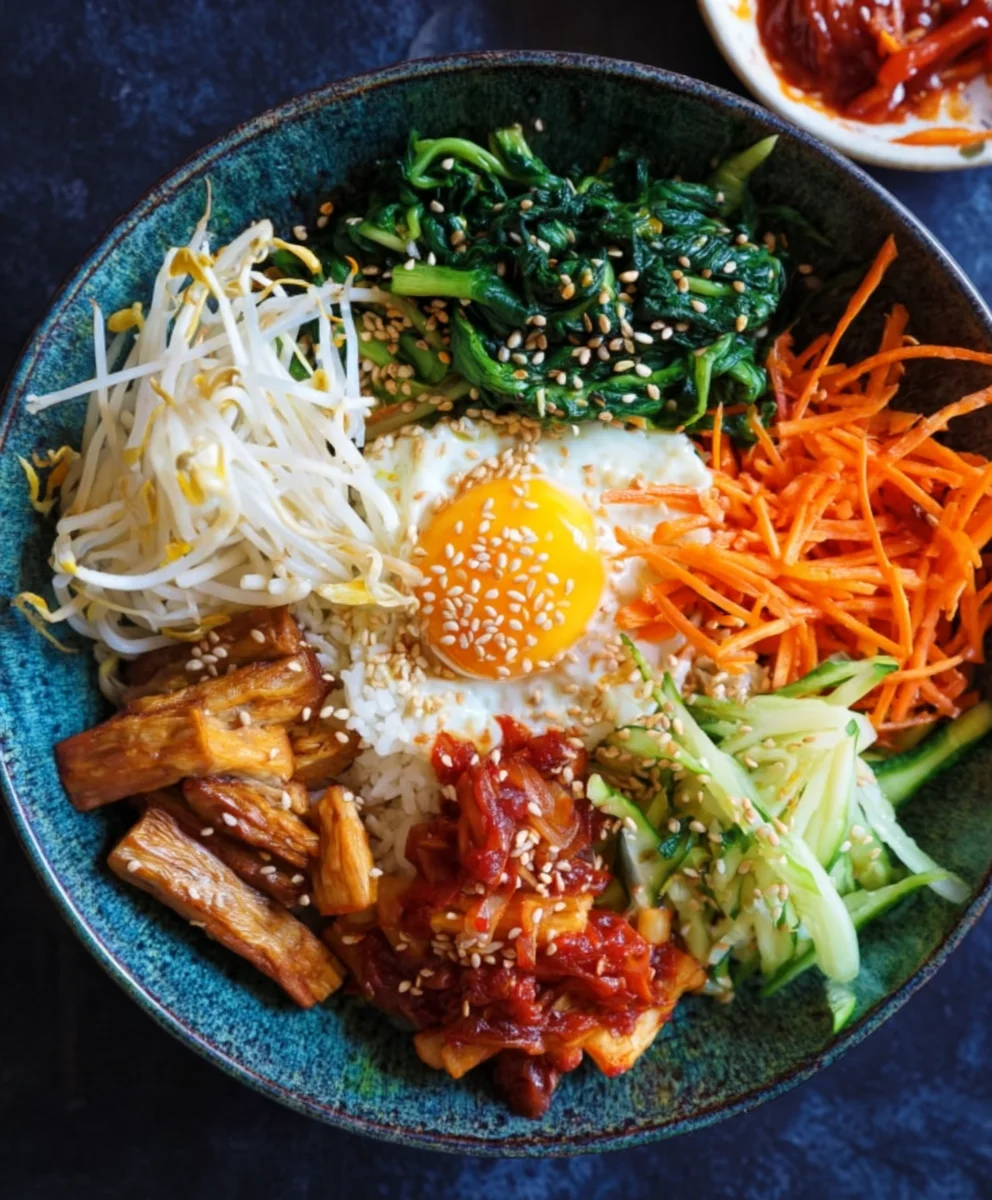
To assemble your Vegan Bibimbap, you’ll need a large, shallow bowl. Traditionally, a hot stone bowl (dolsot) is used to create a crispy rice bottom, but a regular bowl works perfectly too. If you’re using a regular bowl and want to achieve some crispy rice, heat a little sesame oil in the bottom of the bowl over medium-high heat for a minute before adding your rice. Spoon a generous serving of cooked rice (short-grain or medium-grain is ideal) into the center of your bowl. Now, artfully arrange the prepared vegetables and tofu around the rice. Place the seasoned spinach, bean sprouts, julienned cucumber, julienned carrots, and sautéed mushrooms in separate, distinct sections around the bowl. Top the center of the bowl with your golden-brown tofu. Finally, add a dollop of the prepared gochujang sauce to the side of the bowl. For an extra touch, you can drizzle a little more sesame oil over everything. To eat, you’ll mix all the ingredients together with your spoon and chopsticks, incorporating the sauce, rice, vegetables, and tofu into a delicious medley. Enjoy the explosion of flavors and textures!
Conclusion:
Congratulations on mastering the art of creating a delicious and vibrant Vegan Bibimbap! We hope you’ve enjoyed the process of assembling this wholesome and flavorful Korean rice bowl. This recipe is a celebration of fresh ingredients, diverse textures, and satisfying tastes, all coming together in perfect harmony. Remember, the beauty of Vegan Bibimbap lies in its adaptability. Feel free to experiment with different vegetables based on what’s in season or your personal preferences. Serve it as a stunning centerpiece for a weeknight dinner or impress your guests at a gathering. Don’t be afraid to get creative and make this dish your own!
Frequently Asked Questions:
What if I don’t have gochujang?
While gochujang is essential for that authentic spicy kick, you can create a flavorful alternative. Mix a tablespoon of sriracha or your favorite chili garlic sauce with a teaspoon of soy sauce and a pinch of sugar. This will offer a similar heat and depth of flavor to your Vegan Bibimbap.
Can I prepare some components ahead of time?
Absolutely! To make assembly even quicker, you can chop your vegetables and prepare the marinated tofu or tempeh a day in advance. Store them separately in airtight containers in the refrigerator. This will significantly cut down on prep time when you’re ready to enjoy your Vegan Bibimbap.
What are some other serving suggestions?
Besides the classic fried egg (or in our case, a perfectly pan-fried marinated tofu or tempeh), consider topping your Vegan Bibimbap with toasted sesame seeds for added crunch and flavor, or a drizzle of extra sesame oil. A side of kimchi is always a welcome addition, and some enjoy a dollop of vegan sriracha mayo for extra creaminess.
Easy Vegan Bibimbap Recipe- Flavorful & Healthy
A delicious and healthy vegan take on the classic Korean bibimbap, packed with fresh vegetables and flavorful tofu.
Ingredients
-
1 cucumber, julienned
-
200 g spinach, blanched and seasoned
-
100 g bean sprouts, blanched and seasoned
-
1 carrot, julienned
-
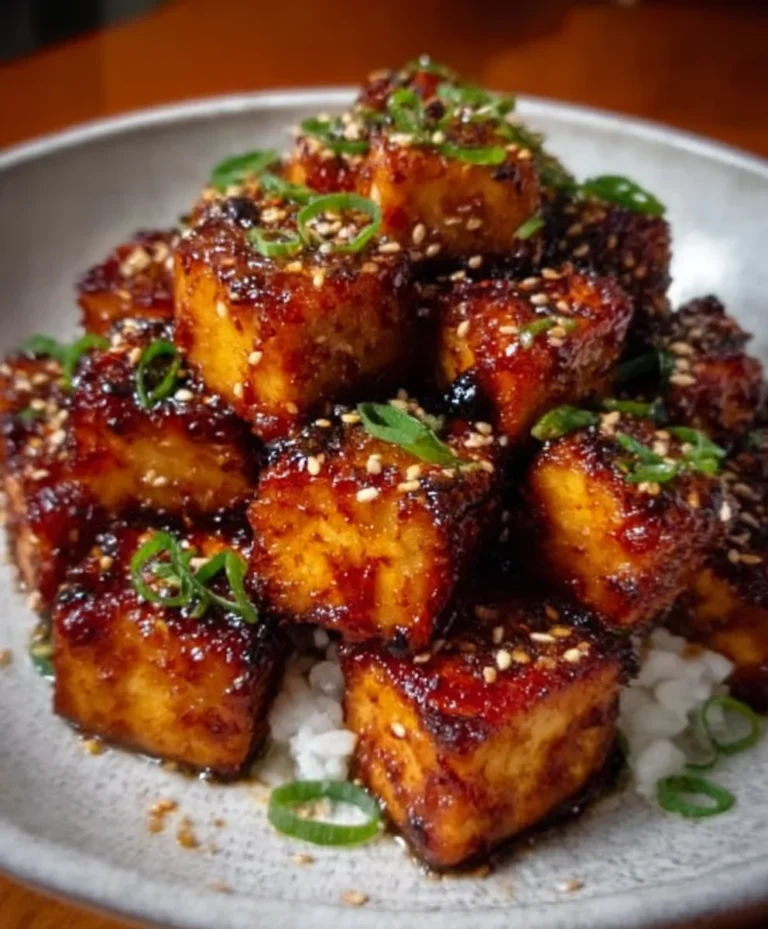
200 g firm tofu, pressed and pan-fried
-
100 g mushrooms (enoki mushrooms recommended), sautéed
-
Salt to taste
-
Sesame oil for cooking and finishing
-
1 tbsp minced garlic
-
2 tbsp gochujang (Korean chili paste)
-
1 tbsp rice vinegar
-
1 tbsp agave nectar or maple syrup
-
1 tbsp soy sauce
-
2 cloves garlic, minced
-
2 tsp sesame oil
Instructions
-
Step 1
Prepare the vegetables: Julienne the cucumber and carrot. Blanch and season the spinach and bean sprouts with garlic, sesame oil, and salt. Sauté the mushrooms with garlic and salt. Lightly sauté or use raw julienned carrots. -
Step 2
Prepare the tofu: Press the firm tofu to remove excess water. Cut into bite-sized pieces and pan-fry in sesame oil until golden brown and slightly crispy. Season with salt. -
Step 3
Make the bibimbap sauce: Whisk together gochujang, soy sauce, rice vinegar, agave nectar or maple syrup, and minced garlic in a small bowl until smooth. Adjust seasoning to taste. -
Step 4
Assemble the bibimbap: Spoon cooked rice into a large, shallow bowl. Artfully arrange the prepared vegetables and tofu around the rice in distinct sections. -
Step 5
Top the center of the bowl with the pan-fried tofu. Add a dollop of the gochujang sauce to the side. Drizzle with a little extra sesame oil if desired. -
Step 6
Mix all ingredients together with your spoon and chopsticks before eating to combine the flavors and textures.
Important Information
Nutrition Facts (Per Serving)
It is important to consider this information as approximate and not to use it as definitive health advice.
Allergy Information
Please check ingredients for potential allergens and consult a health professional if in doubt.